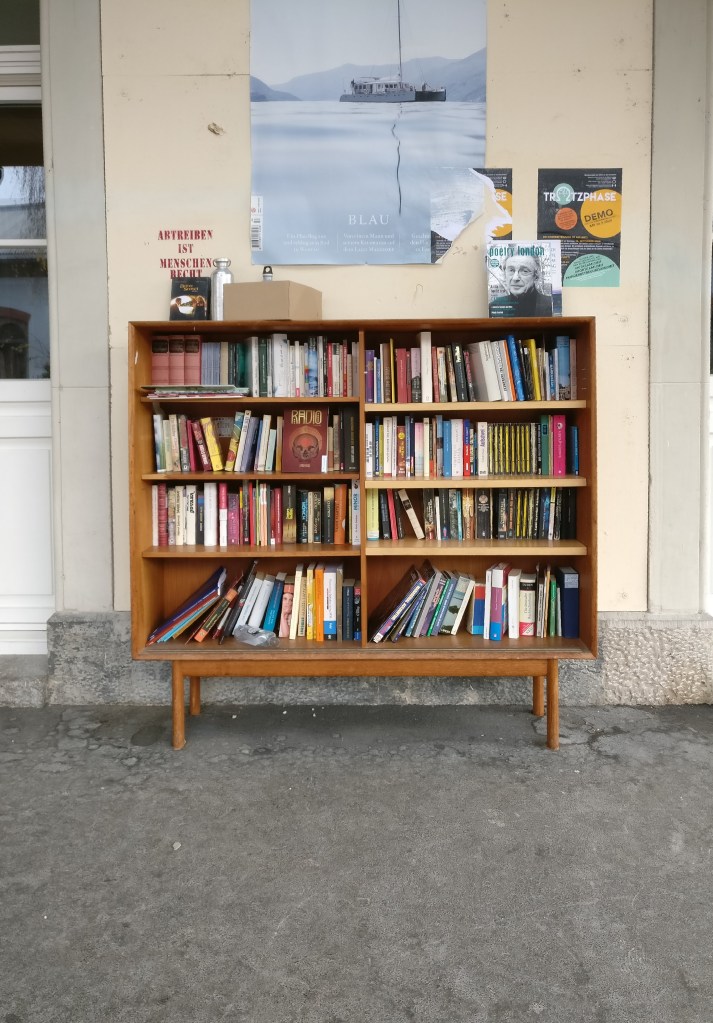
Today, I’m excited to announce something I’ve had in the works for quite some time now. Something that I hope will not only be fun but also enlightening. I’m officially launching my international social media book tracking experiment #WheresRADIO using little libraries, bookboxes, neighborhood libraries, lending libraries, or any of the many names for the small, free libraries where people can access books for free.

The goal of this experiment is to explore how books move into, out of, and around communities using RADIO as a guinea pig as well as provide free access to my book for people who might not be able to afford it. Here’s how it works.

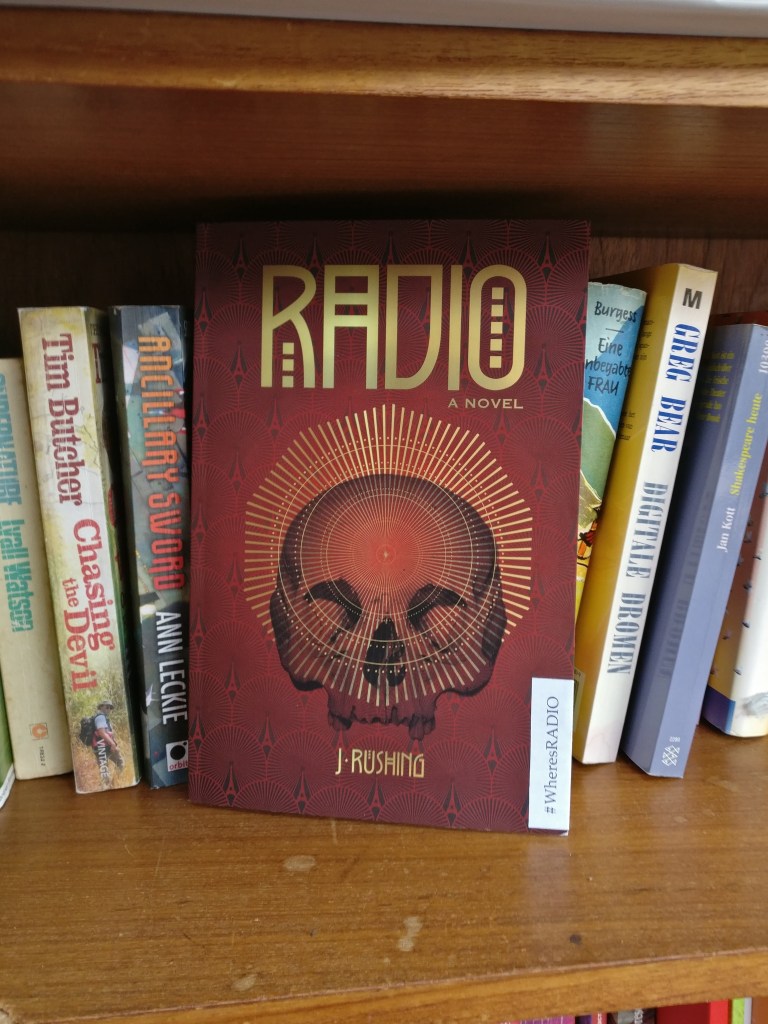
With the help of friends around the world, I’ll be placing numerous copies of RADIO into these free libraries with a sticker on the cover showing #WheresRADIO and another inside with instructions on how to participate. If the reader decides to help out, they’ll just need to take the book to a new, free location, take a picture of that location, and leave the book for someone else to discover. Then they’ll post those pictures to Instagram or Twitter using #WheresRADIO. I’ll then repost/retweet to help my followers in that area know that the book is nearby. If they choose not to participate, they can just put it back where they found it for the next reader to enjoy.

As of today, the first copy is available at Wasserwerkstrasse 93 in Zürich, Switzerland. Click the link for map directions. I’m excited to see who’ll stumble across my little tale of mind control and mythology.

You can follow the adventures of these books on Instatgram or Twitter using the hashtag #WheresRADIO and by checking in over at my #WheresRADIO page.
October was one hell of a month. We successfully moved into a new apartment and checked out of our old one, which in Switzerland is a tense situation. Amongst all the sweat, and fatigue came joy and excitement. RADIO was chosen as a 2020 Self Published Fantasy Blog Off semi-finalist.

While I didn’t make the finals, I’m ecstatic to have my weird tale of opium, jazz, and mind control receive this level or recognition and praise. I’m truly honored and grateful. The judges over at the Fantasy Inn took on an epic task and I thank them for their hard work and time spent. It must have been stressful.

And speaking of stress,I’ve come to learn that the universe has decided that any big event in the life of RADIO must come with a heaping spoonful of stress. Gather ’round and hear the tale of how a calendar year viciously messed with a poor, innocent author.

RADIO was launched this spring and in true 2020 fashion, it’s been dealt some challenges. First, as I was preparing the book to launch, beginning to organize launch events and readings, and researching possible cons to attend, the pandemic set in, throwing all of that out the window. As many other authors who were forced to debut during a global pandemic will tell you, this was definitely stressful. However, one set back does not a trend make.

Fast forward to April and the day RADIO launched. I’d been both prepping for launch and working with Google to sort out some Google Drive issues I was having and all this culminated in discovering, on launch day, that I’d managed to accidentally delete 10+ years of Goggle Docs and Sheets. All of it, gone including most of my writing research. Let’s just say that there was a lot less celebrating that evening than I would have hoped. Luckily, I was able to to get them all back over the next few weeks.

Fast forward again to the launch of the paperback version of RADIO. Time to celebrate? Nah, time to learn that Amazon won’t ship author copies to Switzerland due to customs issues and that Ingram Spark has screwed up a ton of my distribution. A few months go by and it all eventually gets sorted.

Fast forward finally to the end of October where I’m simultaneously moving apartments, trying desperately to navigate shipping, the pandemic, and language barriers to get some stuff for the new place, worrying about how the check out process for our old apartment will go (the Swiss have been known to actually take out white gloves to check for cleanliness) and, on top of it all, stressing about where RADIO will end up in SPFBO. At this point, I can plainly see a clear trend. I’m assuming you can too. The part of that trend I keep reminding myself about is that it always works out in the end.

Did it?

Today, everything is peachy. I’m thrilled with my outcome in the competition, our new place is fantastic, and I have some exciting plans for promotion and interaction coming up. I’m feeling really good about the future of RADIO and my writing.

I just hope the stress+big event combination ends along with this god-forsaken year.

When the virus lets up and it’s safe to do so, I’ll be scheduling those book launch events that I’d planned. I hope to meet a lot of new faces and new readers when that time comes.

In RADIO, the god Marduk finds himself trapped within the body of an opium addicted jazz guitarist. Sharing a mind is difficult enough but having to fight both the previous owner’s will and the physiological call for the drug makes Marduk’s situation even more dire.

While often thought of as a Victorian drug, Opium use was still prevalent, if waning, in 1920’s Paris. Montmartre was the main location of most of the Parisian dens. While booze and cocaine were much more fashionable, opium dens supplied the drug, imported from France’s former Southeast Asian colonies, to customers looking to chase the dragon or le Brune Fée (brown fairy) as the french would say.

Opium is a drug that grew ever more dangerous as its method of use grew more refined over the ages. The sap from the opium poppy (known to the Babylonians as the joy plant) was first eaten as a pain-reliever and mood booster over six thousand years ago. This practice was wide spread. From Roman gladiators dulling fear to Alexander the Great’s armies medicating themselves, opium eating survived for thousands of years. Then, as tobacco was introduced to China in the 14th century, opium began to be added and smoked. This process evolved. Opium sap was cooked down into a paste and smoked over an open flame. The vaporized narcotics entered the system in new more potent ways, and both its effects and addictiveness increased. Today we see it in its most refined forms such as heroin and other opioids. Its ability to help and hurt have been driven to their max.

Opium has always been a mythic drug and there are many, many assumptions and exaggerations attributed to it. Let’s dispel two of its most persistent.

First, opium is often linked to and depicted as causing hallucinations. Opium is non-hallucinatory but does effect perception. High quality opium, known as chandu, causes the user to experience hyper-sensitized senses and acute focus. Poor quality opium, called dross, contains high amounts of morphine and causes the drowsy, dead to the world, effect so often shown in depictions of opium dens. Opium is also notorious for causing incredibly vivid and wild dreams, which may be the origin of the hallucination myth.

The second myth that often surrounds opium is actually a combination involving addiction and withdrawal. Namely that opium is relatively easy to become addicted to but also relatively easy to withdraw from. Nothing could be further from the truth and that is part of what makes this drug so insidious.

Unlike heroin where addiction is rapid, most opium smokers need to have a daily habit for more than a week before addiction takes place. This often lulls users into a false sense of security. Occasional smoking is very unlikely to lead to addiction but what counts as occasional? Once a month? Once per week? Per day? When the definition of occasional becomes too often, addiction can set in.

Ease of withdrawal is also often reversed when comparing heroin and opium. While heroin withdrawal is an awful, long, terrible experience, somehow, opium withdrawal is much worse.

I’ll leave the details of such a withdrawal for you to read in RADIO or for a much more in depth account, I highly recommend Opium Fiend: A 21st Century Slave to a 19th Century Addiction by Steven Martin. What started out as research turned to addiction and resulted in this modern, accurate account of what the cycle of opium addiction is actually like. This book helped my research immensely and I couldn’t recommend it more.